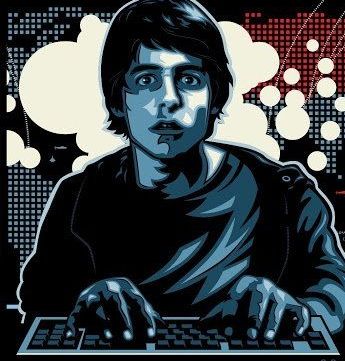
In the 1983 film WarGames, a teenage hacker nearly triggers nuclear war by mistaking a military supercomputer for a game. The plot hinges on isolation: no quick internet search to identify the system, no smartphone to alert authorities. Today, such a premise feels almost unthinkable. A single text or Google query could resolve the crisis in minutes.
As cell phones and computers have become integral to daily life, they’ve reshaped the stories we tell, rendering many cinematic classics implausible in a hyper-connected world.
The ubiquity of smartphones and computers has upended the foundations of many beloved films. In Home Alone (1990), Kevin’s abandonment relies on a landline mix-up and a rushed family departure. A quick call or GPS ping would alert his parents to his presence in Chicago, collapsing the comedy of errors. Similarly, The Blair Witch Project (1999) thrives on the terror of being lost in the woods, a scenario nearly impossible with GPS apps or satellite signals. The masked killer in Scream (1996) depends on anonymous landline calls, which caller ID or a blocked number would foil, while Die Hard (1988) leans on John McClane’s struggle to contact police without a cell phone’s instant 911 dial. These films, iconic for their era, require a world where communication was slow, information scarce, and isolation plausible, conditions eroded by the devices we carry.
Films like Jurassic Park (1993), where a single computer system’s failure unleashes chaos, feel dated with today’s cloud backups and redundant networks. In You’ve Got Mail (1998), anonymous email exchanges drive romance, but modern social media and search engines would expose identities instantly. These stories highlight a paradox: technology enables connection but strips away the mystery that once fueled drama.
Modern thrillers often neutralize technology, as in No Country for Old Men (2007), where cell phones are absent in the desert, or embrace it, as in Unfriended (2015), where horror unfolds on laptop screens. “The interesting thing about technology is how filmmakers reach out to their audience, and social media, and different ways of distribution and connection,” said Vincent Laforet, a filmmaker, at a 2012 Sundance film festival panel. His observation highlights how technology has shifted not just storytelling but also how stories reach viewers, creating new narrative possibilities while closing old ones.
Technology has compressed the space for ambiguity in storytelling. However, certain scenarios remain where even advanced devices offer little help, preserving the potential for narrative conflict.
Extreme isolation, such as being stranded in the Arctic or a dense jungle with no cell service, renders smartphones useless. Without a signal, GPS fails, and calls don’t connect, leaving characters to rely on instinct and ingenuity, much like the stranded filmmakers in The Blair Witch Project. Deliberate signal-blocking, such as a Faraday cage or a shielded bunker, can isolate characters even in a tech-saturated world, creating a modern equivalent to the remote cabins of horror classics. A villain could trap someone in such a space, nullifying their phone’s power, as seen in hypothetical updates to Misery (1990). These scenarios show that while devices have reshaped storytelling, human vulnerability and the chaos of the physical world remain fertile ground for drama.
As we move deeper into a connected future, stories like these remind us of technology’s double-edged sword. Cell phones and computers have rewritten the rules of narrative, closing gaps that once defined our favorite films. Yet, scenarios persist where devices falter, and human ingenuity takes center stage. Whether it’s a hacker in WarGames or a survivor in a post-digital wasteland, the real drama lies not in the technology but in the hands that wield it, or has to compose without it.
In a world where a single call can change everything, the stories that endure are those that remind us what it means to be human, connected or not.

 jonelblog